Hamas Disarmament Plan Encounters Major Hurdles But Brings New Hope to Gaza
Discover how a controversial Hamas disarmament plan faces significant political obstacles while offering unprecedented hope for Gaza's future and regional stabi...
Hamas Disarmament Plan Encounters Major Obstacles Yet Offers Rare Hope for Gaza
A comprehensive Hamas disarmament plan has emerged as a pivotal development in efforts to bring stability to Gaza, despite facing considerable political and logistical challenges. The Hamas disarmament plan represents one of the most ambitious initiatives undertaken in recent years to address the underlying security concerns that have plagued the region for decades.
The Complex Political Landscape
Navigating the intricate web of political considerations that surround any potential agreement proves extraordinarily challenging. Multiple stakeholders hold conflicting interests, and achieving consensus requires unprecedented levels of diplomatic coordination. The political dimension of this Hamas disarmament plan cannot be understated, as various international actors, regional powers, and local factions must align their objectives toward a common goal.
War's Devastating Legacy
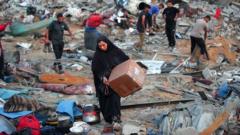
Years of conflict have left an indelible mark on Gaza's physical infrastructure and collective psyche. The destruction wrought by prolonged warfare creates an environment of deep skepticism regarding peace initiatives. Thousands of casualties have created emotional scars that complicate rational negotiations. Within this context, the Hamas disarmament plan must address not only military concerns but also the profound humanitarian needs of affected populations.
The Trust Deficit Challenge
Perhaps the most formidable obstacle confronting any agreement involves the near-total absence of mutual trust among principal actors. Zero trust dynamics mean that verification mechanisms must be extraordinarily robust and transparent. All parties require absolute certainty that commitments will be honored, necessitating international oversight and independent monitoring. The Hamas disarmament plan accounts for these verification requirements through proposed mechanisms designed to build confidence gradually.
Unprecedented Destruction and Reconstruction
The extensive devastation across Gaza's territory complicates implementation of any comprehensive accord. Reconstruction efforts must proceed simultaneously with disarmament initiatives, creating logistical complications. Infrastructure damage affects communication systems, governance capacity, and the ability to enforce agreements. Nevertheless, rebuilding Gaza offers an opportunity to establish new institutional frameworks that could support the Hamas disarmament plan's implementation.
Sources of Cautious Optimism
Despite these formidable obstacles, observers identify genuine reasons for measured hope. The Hamas disarmament plan represents acknowledgment from multiple parties that continuation of the current trajectory serves nobody's interests. International consensus regarding the necessity for change has strengthened considerably. Regional partners increasingly recognize that sustainable peace requires addressing root causes of conflict rather than merely managing symptoms.
Implementation Framework Considerations
Successfully executing any agreement demands meticulous attention to sequencing, timelines, and contingency planning. The Hamas disarmament plan incorporates phased approaches designed to build confidence incrementally. Early verification achievements could establish momentum for subsequent stages. International peacekeeping forces or observer missions might facilitate implementation, though such involvement requires careful negotiation regarding sovereignty concerns.
Forward-Looking Perspectives
While formidable challenges remain, the emergence of the Hamas disarmament plan signals that stakeholders recognize necessity for fundamental change. Constructing viable agreements in post-conflict environments requires patience, sophisticated diplomacy, and genuine commitment to reconciliation. The path forward remains uncertain, yet the willingness to engage seriously with disarmament frameworks offers genuine hope that Gaza's trajectory might finally shift toward stability and recovery.


