British Airways Mayday Flight: Passenger Recounts Moment of Terror
Passenger Edward Killiwick reveals the frightening moments during a British Airways flight's mayday distress call that landed safely at Heathrow.
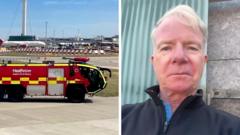
Passenger Account of British Airways Mayday Flight Crisis
Edward Killiwick, a traveler aboard the troubled British Airways mayday flight that issued a distress call earlier this month, has shared his harrowing account of the terrifying ordeal. The British Airways mayday flight descended toward London's Heathrow Airport, prompting emergency protocols as crew members worked to ensure the safety of all passengers on board during what proved to be one of the most anxiety-inducing moments many travelers have experienced.
The incident unfolded as the aircraft encountered technical difficulties mid-flight, necessitating the activation of emergency procedures. During those critical moments, passengers experienced varying degrees of fear and uncertainty as the flight crew maintained focus on executing a safe landing at one of Europe's busiest airports. Killiwick's firsthand testimony provides insight into the psychological toll such emergencies have on civilian travelers.
The Moment of Maximum Fear
According to Killiwick's account, the atmosphere inside the cabin shifted dramatically as crew members began implementing emergency protocols. Passengers became increasingly aware that the situation was more serious than routine flight operations, with some individuals expressing their distress verbally. The emotional intensity peaked as the aircraft approached its descent, with Killiwick recalling hearing someone cry out "I don't want to die" — a raw expression of the collective anxiety gripping those aboard.
The British Airways mayday flight had transmitted a formal distress signal to air traffic control, alerting ground personnel to prepare for an emergency landing. This communication triggered coordinated responses from Heathrow's emergency services, positioning rescue crews and medical personnel in anticipation of potential complications during the touchdown.
Safe Landing at Heathrow
Despite the alarming circumstances surrounding the British Airways mayday flight, the aircraft touched down safely at Heathrow Airport without incident. The skilled pilots demonstrated exceptional composure and expertise, executing the landing maneuver with precision despite the technical challenges the aircraft was experiencing. Once the aircraft came to a complete stop, emergency crews conducted immediate inspections and assessments of all passengers and crew members.
The successful conclusion to the emergency reinforced the effectiveness of modern aviation safety protocols and the rigorous training that commercial airline pilots undergo. The incident highlighted how professional crew training, advanced aircraft systems, and coordinated ground response mechanisms work together to protect lives in critical situations.
Impact on Passengers and Investigations
Passengers who experienced the ordeal have since come forward to share their perspectives, with many expressing gratitude that the situation resolved positively. Killiwick's decision to speak publicly about his experience contributes to the broader conversation about aviation safety and passenger awareness during emergencies. His account provides valuable context for understanding how such incidents affect those aboard.
Following the emergency, aviation authorities initiated investigations into the technical issues that necessitated the mayday call. Engineers and safety inspectors examined the aircraft thoroughly to identify the precise nature of the problem and implement any necessary maintenance or design adjustments. This methodical approach to incident investigation is standard procedure in commercial aviation and reinforces continuous safety improvements across the industry.
Aviation Safety Measures and Regulations
The incident involving the British Airways mayday flight demonstrates the comprehensive safety infrastructure that governs international air travel. Commercial aviation operates under stringent regulatory frameworks established by aviation authorities including the Civil Aviation Authority and the European Union Aviation Safety Agency. These regulations mandate regular aircraft inspections, pilot certification requirements, and emergency procedure drills.
Crew members undergo extensive training that includes emergency response scenarios, ensuring they can manage crisis situations with minimal risk to passengers. From pre-flight checks to in-flight monitoring systems, multiple layers of safety mechanisms exist specifically to detect and address potential problems before they escalate into emergencies. The successful outcome of this particular incident exemplifies how these comprehensive systems function in practice.
Passenger Testimony and Recovery
Edward Killiwick's willingness to recount the details of his experience serves an important function in public discourse surrounding aviation safety. His testimony provides perspective on the emotional experience of passengers during emergencies, offering insights into how individuals respond under extreme stress. Many passengers involved in such incidents require time to process the psychological impact, even when physical safety is ultimately maintained.
The British Airways mayday flight incident, while undoubtedly frightening for those aboard, ultimately reinforced confidence in aviation safety systems. The crew's response, aircraft reliability under pressure, and coordinated emergency landing procedures all performed as designed. These outcomes contribute to the statistical reality that commercial aviation remains one of the safest forms of transportation available to modern travelers, despite the inherent anxiety such emergencies naturally provoke.